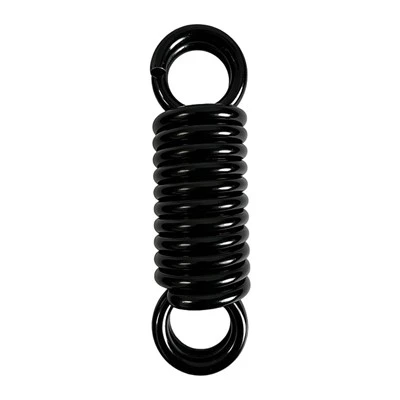
As a seasoned provider of metal springs, I’ve encountered numerous inquiries about the spring constant. It’s a fundamental concept that plays a pivotal role in the design, performance, and application of metal springs. In this blog, we’ll embark on a journey to understand what the spring constant is, how it’s determined, and why it matters in the world of metal springs. Metal Spring
The Basics of the Spring Constant
Let’s start with the basics. The spring constant, denoted by the letter ‘k,’ is a measure of a spring’s stiffness. It quantifies the relationship between the force applied to a spring and the resulting displacement or deformation of the spring. In simpler terms, it tells us how much force is required to stretch or compress a spring by a certain amount.
According to Hooke’s Law, formulated by the 17th-century physicist Robert Hooke, the force exerted by a spring is directly proportional to its displacement from its equilibrium position. Mathematically, this relationship is expressed as:
[F = -kx]
Where:
- (F) is the force applied to the spring (in newtons, N)
- (k) is the spring constant (in newtons per meter, N/m)
- (x) is the displacement of the spring from its equilibrium position (in meters, m)
The negative sign in the equation indicates that the force exerted by the spring is in the opposite direction to the displacement. In other words, when you stretch a spring, it pulls back with a force proportional to the amount of stretch, and when you compress it, it pushes back with a force proportional to the amount of compression.
Determining the Spring Constant
Now that we understand what the spring constant represents, let’s explore how it’s determined. There are several methods for measuring the spring constant, each with its own advantages and limitations.
Experimental Method
The most straightforward way to determine the spring constant is through experimentation. This involves applying a known force to the spring and measuring the resulting displacement. By repeating this process with different forces and plotting the force-displacement data on a graph, you can calculate the spring constant from the slope of the linear relationship between force and displacement.
Here’s a step-by-step guide on how to conduct an experiment to measure the spring constant:
- Attach the spring to a fixed support: Use a clamp or a hook to secure one end of the spring to a stable surface.
- Add a known mass to the other end of the spring: Use a mass hanger and a set of standard masses to apply a known force to the spring. The force applied to the spring is equal to the weight of the mass, which can be calculated using the formula (F = mg), where (m) is the mass in kilograms and (g) is the acceleration due to gravity ((g = 9.81 m/s^2)).
- Measure the displacement of the spring: Use a ruler or a displacement sensor to measure the change in length of the spring from its equilibrium position.
- Repeat steps 2 and 3 with different masses: Record the force applied to the spring and the corresponding displacement for each mass.
- Plot the force-displacement data on a graph: Use a graphing software or a spreadsheet to create a scatter plot of the data, with force on the y-axis and displacement on the x-axis.
- Fit a straight line to the data: Use a linear regression analysis to find the equation of the line that best fits the data points. The slope of this line is equal to the spring constant.
Theoretical Method
In addition to experimental methods, the spring constant can also be calculated theoretically based on the physical properties of the spring, such as its material, dimensions, and geometry. The formula for calculating the spring constant of a helical coil spring, which is one of the most common types of metal springs, is given by:
[k=\frac{Gd^4}{8nD^3}]
Where:
- (k) is the spring constant (in N/m)
- (G) is the shear modulus of the spring material (in Pa)
- (d) is the wire diameter of the spring (in m)
- (n) is the number of active coils in the spring
- (D) is the mean diameter of the spring (in m)
The shear modulus (G) is a material property that describes the resistance of a material to shear deformation. It depends on the type of material and can be found in engineering handbooks or online databases.
Factors Affecting the Spring Constant
The spring constant of a metal spring is influenced by several factors, including:
- Material properties: The type of material used to make the spring, such as steel, stainless steel, or titanium, affects its stiffness and, therefore, its spring constant. Materials with higher shear moduli will generally have higher spring constants.
- Wire diameter: Increasing the wire diameter of a spring increases its stiffness and, consequently, its spring constant. This is because a thicker wire is more resistant to deformation.
- Number of coils: The number of active coils in a spring also affects its spring constant. Generally, increasing the number of coils decreases the spring constant, as the spring becomes more flexible.
- Mean diameter: The mean diameter of a spring is the average diameter of the coils. Increasing the mean diameter of a spring decreases its stiffness and, therefore, its spring constant.
Importance of the Spring Constant in Metal Spring Applications
The spring constant is a crucial parameter in the design and selection of metal springs for various applications. Here are some reasons why the spring constant matters:
- Load-bearing capacity: The spring constant determines how much force a spring can withstand without exceeding its elastic limit. By selecting a spring with the appropriate spring constant, engineers can ensure that the spring can support the required load without permanent deformation.
- Deflection characteristics: The spring constant also affects the deflection behavior of a spring. Springs with higher spring constants will deflect less under a given load, while springs with lower spring constants will deflect more. This property is important in applications where precise control of deflection is required, such as in suspension systems and precision instruments.
- Resonance and vibration: The spring constant plays a role in determining the natural frequency of a spring-mass system. By adjusting the spring constant, engineers can avoid resonance, which can lead to excessive vibration and potential failure of the system.
Conclusion
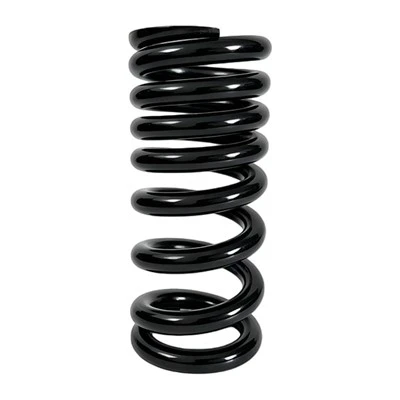
In conclusion, the spring constant is a fundamental property of metal springs that quantifies their stiffness and determines their behavior under load. Understanding the spring constant is essential for designing, selecting, and using metal springs in a wide range of applications. Whether you’re an engineer, a designer, or a manufacturer, having a solid grasp of the spring constant will help you make informed decisions and ensure the optimal performance of your products.
Spring Steel Wire If you’re in the market for high-quality metal springs and need expert advice on spring selection, design, or performance, I’m here to help. As a trusted provider of metal springs, I have the knowledge, experience, and resources to meet your specific needs. Contact me today to discuss your requirements and explore how our metal springs can enhance the performance and reliability of your products.
References
- Halliday, D., Resnick, R., & Walker, J. (2014). Fundamentals of Physics. Wiley.
- Shigley, J. E., & Mischke, C. R. (2003). Mechanical Engineering Design. McGraw-Hill.
- Budynas, R. G., & Nisbett, J. K. (2011). Shigley’s Mechanical Engineering Design. McGraw-Hill.
Baoding Zhongxin Spring Manufacturing Co., Ltd.
We’re known as one of the most reliable metal spring manufacturers and suppliers in China. With abundant experience, we warmly welcome you to buy durable metal spring made in China here and get pricelist from our factory. All customized springs are with high quality and competitive price.
Address: West Side, 200 Meters North of Chenzhuang Gas Station, Pangkou Town, Gaoyang County, Baoding City, Hebei Province, P.R. China
E-mail: 13292951555@163.com
WebSite: https://www.zhongxinind.com/
