Hey there, if you’re here because you’re staring at an old HVLS fan motor in your warehouse or workshop and wondering, “Can I just plop this bad boy outside and call it a day?”—you’re not alone. As a supplier of HVLS fan motors, I get this question all the time—and honestly, it’s one that’s got a really nuanced answer, not just a straight yes or no. Let’s break this down like we’re chatting over a coffee (or a cold beer, depending on when you’re reading this) so it doesn’t sound like a boring tech manual. HVLS Fan Motor
First, let’s do a quick refresher for anyone who might be new to the HVLS game. HVLS stands for High-Volume, Low-Speed—think those massive 10-24 ft fan blades that spin slow as hell (usually under 100 RPM) but move tons of air. The motor’s the heart of that whole setup, right? Mine and other suppliers’ HVLS motors are built for indoor use first—think warehouses, gyms, barns with mostly covered sides, big retail spaces where the only “wetness” might be a spilled soda or a dusty air vent. But outdoor use is a whole different beast, and that’s where things get tricky.
Let’s start with the big, obvious threats to any electrical part outside: weather. Not just rain, either. I’m talking about UV radiation from the sun, extreme temps (sweltering summer heat, freezing winter cold), salt if you’re near the coast, and even wind-borne debris like leaves, pollen, or gravel. Wait, but let’s get specific—why does that stuff mess with an indoor HVLS motor, and can we fix it?
For example: Most indoor HVLS motors have a standard enclosure, like IP44. What does that mean? IP ratings are the industry shorthand for Ingress Protection. IP44 means it’s protected from solid objects bigger than 1mm (so most dust bunnies) and splashing water from any direction. That’s perfect for indoor use, but outside? If a sudden downpour hits, or even if you’re setting it up under an open carport and rain blows in sideways, IP44 might not cut it. What’s the outdoor standard? IP65, usually—protected from dust and low-pressure water jets from any direction. The problem is, a lot of off-the-shelf indoor HVLS motors (the ones some folks might have laying around) only hit IP44, so they’d fry fast in that kind of exposure.
But wait—what if someone tries to modify their indoor motor? Like, wrap it in plastic, or stick it in a custom box? I’d say proceed with major caution. I’ve seen guys try that, and half the time, it leads to overheating. Those indoor motors are cooled by the air flowing around them, right? If you box them up, you’re blocking that airflow, and the motor will run hotter than it’s designed for. That shortens the lifespan big time—way more than just weather alone. I had a customer last year who tried wrapping his indoor motor in a heavy-duty tarp for his outdoor patio restaurant setup; by the end of summer, the bearings were shot, and he had to replace the whole motor. So that’s a hard no on DIY modifications, at least not without knowing what you’re doing.
Next up, temperature extremes. If you live in a place where winter drops below 32°F (0°C) or summer hits 100°F (38°C), that affects how the motor performs. Indoor HVLS motors are rated for a specific temp range—usually like -20°F to 120°F (-29°C to 49°C), but that’s for indoor air. Outside, if it’s 110°F (43°C) out, that ambient temp means the motor can’t shed heat as well, so it’s running at its max load all day. Freezing temps are even worse because the lubricant in the bearings can thicken, making the motor work harder to spin, which wastes energy and wears parts faster. Now, some of our motors are actually rated for wider temp ranges, but those are the ones specifically built for outdoor use—they’re not the standard indoor models most people have.
Wait, what about coastal areas specifically? Salt air is a silent killer for metal parts. Indoor motors might have a regular steel housing that’s prone to rust if it’s exposed to salt spray. We use marine-grade aluminum for our outdoor HVLS motors’ housings because it resists salt corrosion way better. If you use an indoor motor by the ocean, even if it’s under a covered patio, the salt in the air will eat through the housing over a year or two, and that exposes the internal wiring and windings to damage. I’ve had a few coastal customers reach out asking about retrofitting, and I always tell them—don’t waste your time with an indoor motor. It’s not worth the headache when there are purpose-built options that last.
But hold up—this isn’t a complete “no” on ever using an HVLS motor outside. There are totally legitimate use cases, as long as you’re intentional about it. Let’s say you have a covered outdoor space—like a horse arena with open sides, a barn with a wide overhang, a patio restaurant with a permanent awning that keeps most direct rain and harsh sun off, or a loading dock that’s only open on one side. That’s a middle ground, right? In those cases, if your motor is rated for at least IP54, and maybe has a corrosion-resistant coating, it can work. Wait, but even then, you’ve got to account for humidity. Barns are super humid, especially if you’re milking cows or storing hay—so condensation can build up inside the motor enclosure. That’s why we add little drainage holes in our outdoor motors, and seal the windings with a special epoxy to keep moisture out. Indoor motors don’t have that, so condensation can short out the wiring over time.
I also should talk about wind load, which is a big one for outdoor setups. HVLS fans are huge—they have massive blades, so when they’re spinning outside, they catch way more wind than they would indoors. Indoor installations are engineered for steady, low-velocity airflow inside, but outside, gusts can make the fan wobble, which puts extra stress on the motor’s shaft and bearings. Our outdoor HVLS motors have reinforced shafts and heavier-duty bearings to handle that extra torque and wobble. Indoor motors aren’t built for that kind of dynamic load, so they can seize up or break entirely if you spin them outside in even moderate wind.
Now, let’s get real about cost, because I know that’s a big factor for a lot of people. If you try to use an indoor HVLS motor outside, you might save a few bucks upfront, but you’ll end up replacing it way sooner—maybe every 1-2 years, vs. 8-10 years for a purpose-built outdoor motor. I had a customer in Texas who tried the DIY route: he had an old indoor motor from his warehouse, spent $50 on a custom waterproof box, and it died in 8 months. When he bought one of our outdoor motors, he told me it paid for itself in just one year because he didn’t have to keep replacing parts or dealing with downtime when his fan stopped working during peak summer (when every warehouse, restaurant, and barn needs airflow).
Wait, but what if someone really wants to repurpose an indoor motor for a temporary outdoor job? Like, a big outdoor festival, a temporary construction site, or a pop-up event that only lasts a few months? Is that okay? Maybe, but with a ton of caveats. First, you need to make sure you store it in a dry, temp-controlled space when you’re not using it. Second, you’ve got to cover it perfectly when it’s not running—no gaps where rain or dust can get in. Third, you can’t leave it unattended for long periods. Fourth, you should check it every few weeks for any signs of rust, overheating, or unusual noises. Even then, it’s a risk, and I’d still recommend renting or buying a temporary outdoor-rated motor if that’s your use case. Repurposing might work for a few months, but it’s not a long-term solution.
Let me also address a common myth I hear all the time: “HVLS motors are all just big electric motors, right? So any big motor would work outside.” No, that’s not even close. Small electric motors for tools, even if they’re outdoor-rated, don’t have the same torque or load capacity that HVLS motors do. HVLS motors are built to spin massive blades at low speed for hours on end—they have heavy-duty windings, high-torque bearings, and thermal protection that kicks in if they overwork. Regular big motors are built for short, high-load tasks, so they’d burn out instantly if you tried to use them for a HVLS fan outdoors.
So, to wrap this up—can an HVLS fan motor be used outdoors? The short answer is: only if it’s specifically designed for outdoor use. If you’re even considering putting an indoor motor outside, do yourself a favor and don’t do it. It’s a waste of money, time, and will end up causing more problems than it solves.
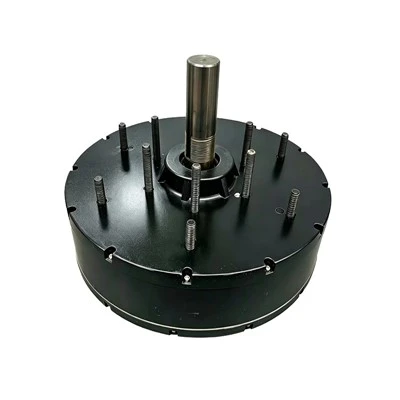
Now, if you’re in the market for an HVLS motor for outdoor use—whether it’s for a covered patio, barn, arena, loading dock, or whatever—hit us up. We’re here to help you pick the right motor for your space, no salesy nonsense, just straight talk about what works and what doesn’t. No pressure, just real advice from a supplier who’s been in this game long enough to know what works when the weather gets crazy.
Industrial Fan Regulator References:
- International Electrotechnical Commission. (2013). IEC 60529: Degrees of protection provided by enclosures (IP Code).
- National Electrical Manufacturers Association. (2021). NEMA MG 1: Motors and Generators – General Requirements, Terminology, and Definitions.
- ASHRAE. (2020). HVAC Applications Handbook: Fans and Air Distribution.
- Marine Corrosion Prevention Association. (2019). Best Practices for Corrosion Resistance in Industrial Electrical Equipment.
Wuxi Rstar Electric Co., Ltd.
With abundant experience, we are one of the most professional hvls fan motor manufacturers and suppliers in China. Welcome to wholesale bulk customized hvls fan motor at competitive price from our factory. If you have any enquiry about quotation, please feel free to email us.
Address: 9th Floor, Building 9, Shengfeng Lianzhi Valley, No.67 Zhujiang Road, Xinwu District, Wuxi City
E-mail: rstarbz@163.com
WebSite: https://www.rstar-wx.com/
