Hey there, let’s cut through the tech jargon first—you’ve probably seen big, beefy transformers or massive generators at power plants, right? Those things don’t work with plain old copper wire. If they did, the wire would heat up so fast it’d melt before you could flip the switch. That’s where CTcs come in—short for continuously transposed conductors, and if you’re here, odds are you’ve either heard the name a dozen times and want the real tea, or you’re new to the game and trying to figure out why every power component manufacturer won’t shut up about them. I’m on the CTc supply side, so I deal with this stuff daily—no stuffy textbook definitions, just what actually matters for gettin’ the job done. Continuously Transposed Conductors

Let’s start with the problem plain and simple. Take a big transformer winding, for example. If you wrap a single solid copper bar around and around, all the current flows through the outer part of the bar, right? That’s the skin effect—current chases the edge of the conductor like it’s late to a party. The inner part? It’s basically useless dead weight, and it generates all kinds of extra heat. Throw in proximity effect too—when adjacent wires push current away from each other, and that heat spikes even more. Suddenly your super expensive transformer is wasting energy, overheating, and burning out way faster than it should. That’s a nightmare for grid operators who need stuff to last 30+ years, no downtime.
CTcs fix that by rearranging the current path so every little copper strand gets a turn on the outer edge. Here’s the magic: instead of a solid bar, you’ve got a bundle of small, insulated copper strands (usually anywhere from 6 to like 50, depending on the voltage). They’re twisted continuously—no breaks, no separate coils to rewind. Every few inches, you transpose the whole bundle, meaning you flip the strand positions so each one takes its time on the outer layer. Over a full winding, every strand’s been on both the inside and outside an even number of times. No more dead inner copper, no more lopsided current, way less heat.
Wait, let me make that concrete. Suppose you’ve got a 10kV transformer winding. If you used solid copper, the AC resistance would be like 1.2 ohms, heat generation way too high. Swap in a CTc with 12 strands, transposed every 5 cm, and that AC resistance drops to 0.85 ohms—almost a 30% reduction in losses. That isn’t just “better”—that’s the difference between a transformer that hits its efficiency ratings and one that’s costing you thousands in extra power bills every year. Generators are the same deal—their stator windings run at insane currents, so CTcs are non-negotiable if you want the damn thing to not overheat mid-grid stress test.
Now, what’s a CTc made of, exactly? Let’s get into the real deets, not the marketing fluff. The strands are usually high-purity electrolytic copper—nothing recycled, because purity affects conductivity and tensile strength. They get coated with a thin layer of polyimide or epoxy enamel for insulation—super thin, so you don’t waste space, but tough enough to stand up to the winding process and the heat in operation. The whole transposition is done by automated machines, not hand-wound, because consistency is key. Mess up a transposition spot, and you’ve got hot spots that defeat the whole purpose. We test every batch for transposition uniformity, insulation integrity, and tensile strength—no cutting corners here.
What are they actually used for, anyway? Yeah, big transformers first—power transformers at substations, distribution transformers for heavy industrial sites, even traction transformers for trains (the ones that power high-speed rail lines). Then there’s generators: hydro, thermal, wind, even big battery energy storage systems (BESS) that use high-current inverters. Oh, and some big reactors for grid stability, too. Anywhere you have high current and AC voltage above, like, 1kV, CTcs are the go-to. If you’re building a new 1GW wind farm, you won’t find a generator manufacturer that suggests solid copper—they’ll spec CTcs before the blueprints are even done.
Wait, let’s bust a common myth: CTcs aren’t just for “big power.” We get orders for smaller CTcs for industrial furnaces, too—those high-temperature furnaces need stable, low-loss windings that don’t degrade fast, and CTcs deliver that. So it’s not just utility-scale stuff, it’s any application where high current and efficiency matter.
Now, as a supplier, what do we actually bring to the table? A lot of guys selling CTcs just cut corners on insulation quality or transposition precision, which leads to early failures. We’ve been doing this for years, so we know the ins and outs—like, how to adjust transposition pitch for specific applications: for high-frequency stuff (wait, yeah, some BESS use higher frequencies) you need tighter transposition, like every 2 cm, while low-frequency 50/60Hz transformers can go up to 10 cm. We don’t do one-size-fits-all. You give us your specs—voltage, current, winding size, operating temp—and we tailor the CTc to fit, not the other way around.
Also, lead times matter. Power projects move fast, especially when you’re dealing with grid upgrades or new wind farms. We keep standard sizes in stock, but can rush custom orders in as little as 2 weeks if needed, no excuses. And we don’t just sell you the wire—we help with design. If you’re not sure how many strands you need, or what pitch to use, our team of engineers will walk you through it, no hidden fees, no “figure it out yourself” fine print.
Wait, another thing: recent advancements. Yeah, CTcs have been around since the mid-1900s, but they’ve gotten way better lately. New insulation materials that can handle higher temps (up to 220C, compared to the old 180C) mean smaller windings, less space, lighter equipment. That’s huge for offshore wind turbines, where every kilo of extra weight adds cost to the foundation and installation. We use that new insulation now, so our CTcs are smaller, more efficient, last longer in harsh environments.
Oh, and corrosion resistance. If you’re working in a coastal area (offshore wind, substation in Florida), salt air eats through regular copper fast. We offer a tin-plated option for the outer strands, or even nickel-plated, so the CTc stands up to harsh environments without losing conductivity. That’s a game-changer for projects in tough climates—no replacing windings every 10 years, which is a massive pain.
Let’s get back to why you, as someone in this industry, should care. Whether you’re a transformer OEM, generator builder, or procurement manager at a utility, the bottom line is: CTcs reduce losses, lower maintenance, extend equipment life. A customer of ours recently switched from solid copper to our CTcs in their 500MVA transformer. Their energy losses dropped by 27%, which saved them over $120k a year in power costs. And the transformer’s lifespan went from 28 years to 35, so they didn’t have to replace it for 7 extra years. That’s not a small win—that’s millions in savings over time.
Common mistakes people make when choosing CTcs: going for the cheapest option, which usually means lower purity copper or uneven transpositions. We’ve seen guys buy cheap CTcs that overheated so bad in 3 years they had to rewind the whole transformer—costing way more than they saved on the wire. Or not giving enough specs, like operating temperature, so we send them a CTc that melts in their high-heat application. That’s why we push to talk through your project fully before quoting.
Look, at the end of the day, CTcs aren’t some mysterious, futuristic tech. They’re a solution to a super old problem: when you need high current, you don’t waste copper. They’re the backbone of every reliable power system, whether it’s a tiny industrial furnace or a massive grid substation. As a supplier, my job isn’t just to sell you wire—it’s to make sure your project works, stays efficient, and doesn’t have avoidable downtime.
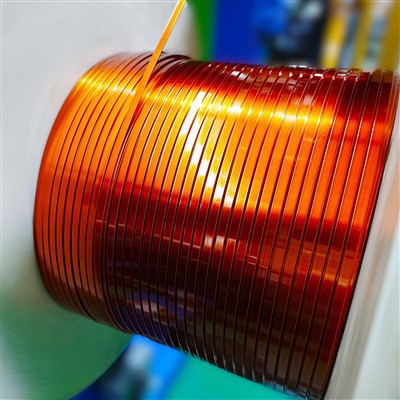
If you’re working on a new project, upgrading existing equipment, or just tired of the headaches that come with bad windings, hit us up to chat about CTcs. We can go over specs, run quick loss calculations, or just answer whatever questions you’ve got—no pressure, no sales pitches that feel like a used car lot. This is what we do, and we’re here to help make your job easier.
Continuously Transposed Conductors References
- Electric Power Research Institute (EPRI). (2021). Advances in Conductors for Grid and Industrial Power Applications. EPRI Press.
- Kundur, P. (2007). Power System Stability and Control (2nd ed.). McGraw-Hill Education.
- Copper Development Association (CDA). (2020). Continuous Transposed Conductors: Design, Performance, and Application. CDA Technical Report 102-20.
- IEEE Standards Association. (2018). IEEE Guide for the Design and Application of Power Transformers (IEEE Std C57.12.00-2018). IEEE.
Tianjin Jingwei Power Technology Co., Ltd.
As one of the most professional continuously transposed conductors manufacturers and suppliers in China, we’re featured by quality products and good service. Please rest assured to buy durable continuously transposed conductors made in China here from our factory. Contact us for more details.
Address: No.1 Chuangxin Rd. Xiaozhan Industrial Park, Jinnan District, Tianjin, China
E-mail: info@jwdc.cn
WebSite: https://www.jw-dcs.com/
