Hey everyone, Sarah here, and I’ve been getting a ton of DMs and emails lately from customers, new and old alike, all asking the same question: “Is polyester spandex fabric water-resistant?” Let’s cut to the chase—this is one of the most misunderstood questions we get as a polyester spandex fabric supplier, and honestly, it’s no surprise. You see, polyester spandex is used for everything from activewear leggings and swimwear to athletic tops and even everyday casual pieces, so it’s normal to mix up water-resistant, water-repellent, and waterproof, right? I’ve worked with this fabric for 7 years now, so let me break this down like I would to a client who’s staring at a pile of swatches, half-ready to place an order but confused about what they actually need. Polyester Spandex Fabric
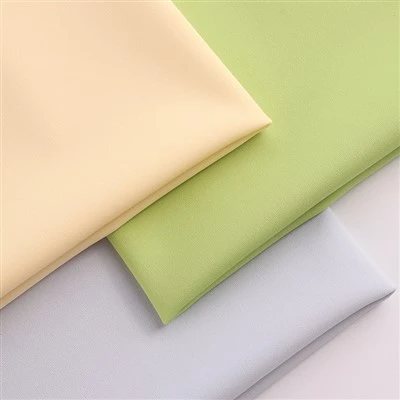
First, let’s get one super important thing straight: polyester spandex itself is not naturally water-resistant. Wait, hold on—don’t hit that unsubscribe button yet! That doesn’t mean it can’t handle water at all, and it definitely doesn’t mean it’s useless for sports or activities where moisture is a factor. Let’s start with what makes up polyester spandex, because that’s the root of this whole confusion. Polyester is a synthetic polymer, right? It’s made from long chains of plastic molecules, and those molecules are tightly packed together, with no gaps between them for water to seep through. Spandex, also called Lycra if you’re familiar with that brand name, is another synthetic fiber that’s stretchy—think 4-way stretch for leggings that move with you. Most polyester spandex blends are 80-20 or 90-10 polyester to spandex, so polyester is the main player here.
Now, here’s the key: pure polyester is hydrophobic, which means it repels water, but spandex is a little different. Spandex can absorb some moisture, but only a tiny amount—way less than cotton, for example. But when you mix them together, the base fabric isn’t just sitting there waiting for water to sink in. But wait, that’s not the same as being water-resistant. Let’s define terms real quick, since everyone uses them interchangeably: water-resistant means a fabric will resist light to moderate water exposure, like a light rain or a quick splash. Waterproof means it won’t let any water through at all, no matter how hard it rains or how long you’re submerged. And water-repellent is similar to water-resistant, but usually refers to a coating that makes water bead up on the surface, not just the fabric’s natural properties.
So where does that leave polyester spandex? The base fabric—no coatings, no treatments, just plain polyester spandex—will repel small amounts of water, like a single drop of coffee or a splash from a water bottle. But if you get caught in a 20-minute downpour, that fabric is going to get wet through. Why? Because even though polyester is hydrophobic, the seams, the hems, and any other openings in the fabric are gaps where water can get in. Also, if the fabric is stretched tight, like in a pair of running tights, it can develop tiny micro-pores as it moves, which let water seep through over time. That’s a big point I always bring up to activewear brands who come to me asking for “water-resistant polyester spandex” for winter running gear—if you don’t account for stretch-related pores, you’re going to end up with gear that lets rain in halfway through a run.
Now, here’s the fun part: polyester spandex is super easy to treat to make it actually water-resistant. That’s why so many of our custom-blend fabrics have a DWR coating—Durable Water Repellent, for short. Let’s talk about DWR, because that’s the game-changer here. DWR is a thin coating that’s applied to the surface of the fabric, and it works by making water form into beads that roll right off, like water on a freshly waxed car. I always explain this to clients as: untreated polyester spandex is like a new t-shirt you just pulled out of the package—water hits it and beads up for a second, then sinks in. DWR-treated polyester spandex is like that same t-shirt sprayed with a rain repellent—water hits it and rolls right off, no sinking.
But wait, there’s a catch with DWR: it wears off over time. How long does it last? Depends on how you care for the fabric, how often you use it, and how harsh the conditions are. For example, a pair of DWR-treated polyester spandex hiking leggings that you wash once a month might keep their water resistance for 6-12 months. But if you’re washing the same leggings every week with harsh detergents or fabric softeners (which break down DWR), you might only get 2-3 months of good water repellency. And if you’re using it for something even more intense, like waders? Yeah, DWR alone won’t cut it there—you’d need a full laminate, like a Gore-Tex membrane, which is a different fabric entirely. That’s another thing I always clarify: if a client asks for waterproof polyester spandex, I tell them straight up that it’s not a “set it and forget it” waterproof layer, but it’s perfect for light to moderate water exposure.
Let’s also talk about common use cases, because that’s where this confusion really hits. Let’s say you’re a yoga studio owner looking for new mats, wait no—wait, activewear. If you’re making swimwear: polyester spandex is great because it dries fast, but it’s not water-resistant for long swims, right? Wait, no—swimwear actually absorbs a tiny amount of water, but that’s a feature, not a bug. If your swimsuit was totally water-resistant, it would stay full of water and be super heavy in the pool. So for swimwear, we don’t do DWR coatings—we just use plain polyester spandex, because its natural hydrophobic properties help it dry way faster than cotton, which stays wet for hours. That’s a perfect example of when water resistance isn’t what you need, and plain polyester spandex is better.
Another use case: running tights for cool, light rain. If you’re doing a 5K on a misty morning, DWR-treated polyester spandex will keep the light mist off, but if you get caught in a sudden downpour, those tights will get wet. I had a client last year who tried to use untreated polyester spandex for rain jackets, and guess what? The fabric repelled water for 5 minutes, then got soaked through, and the seams were dripping. He came back to us, and we worked with him to develop a 92-8 polyester spandex blend with a lightweight DWR coating and taped seams—now his jackets hold up to light rain for hours, and they’re still stretchy enough to run in. That’s the sweet spot, right? Balancing stretch, durability, and water resistance for the specific use case.
Wait, let’s address another myth I hear all the time: “polyester spandex is waterproof because it’s synthetic.” No, that’s not true. All synthetic fabrics are hydrophobic to some extent, but none of them are fully waterproof as a base fabric. Even the most tightly woven polyester spandex has tiny gaps between the fibers that are big enough for water molecules to get through, especially when the fabric is stretched. The only way to make a fabric fully waterproof is to add a membrane layer or a lamination, which adds weight and reduces stretch—so if you need stretch, you’re never going to get fully waterproof fabric, just water-resistant. That’s a key point I always make clear to customers who come to me thinking polyester spandex is some kind of magic waterproof material.
Now, let’s talk about how we test our fabrics, since I’m a supplier, and we take quality control seriously. For water resistance, we do a spray test first—you know, the one where you spray water on a fabric sample and see if it beads up or absorbs. If it beads up and rolls off, that’s a pass for light water resistance. We also do a rain test, where we hang the sample under a simulated light rain for 10 minutes, then check for water seepage. And for durability, we wash the sample 20 times in a standard washing machine, then retest the spray and rain resistance to make sure the DWR is holding up. We don’t just slap a DWR coating on and call it good—we make sure it works for the life of the product, not just the first wear.
I also get questions about care, because if you want your polyester spandex fabric to stay water-resistant, you have to take care of it right. That’s another thing a lot of people don’t realize—even the best DWR coating will break down if you wash it wrong. So what’s the rule? Use mild detergent, no fabric softener, no bleach, and wash on a cold, gentle cycle. Tumble dry on low heat, or air dry if you can—high heat can also break down DWR. And if your fabric does start to lose its water repellency, you can reactivate or reapply DWR treatments, but that’s a whole other blog post. For now, just remember: skip the fabric softener, it’s your worst enemy when it comes to keeping water resistance.
Let me switch gears for a second and talk about when you should and shouldn’t use polyester spandex for water-related uses. If you need something for heavy, prolonged water exposure—like waders, whitewater rafting gear, or deep-sea fishing suits—polyester spandex isn’t the right call. You’d be better off with a heavier, laminated waterproof fabric that sacrifices stretch for complete water protection. But if you need something for light water exposure, moisture-wicking, and stretch—like hiking leggings, running jackets, casual rain tops, or even beach cover-ups—DWR-treated polyester spandex is perfect. It’s way more comfortable than heavy nylon rain gear, it dries fast, and it still holds up to light rain and splashes.
Wait, let’s circle back to the original question one more time to make sure I’m not missing anything. Is polyester spandex fabric water-resistant? The answer is: it can be, if it’s treated with a DWR coating or another water-repellent treatment. Untreated polyester spandex has minor natural water-repellent properties, but it’s not suitable for any significant water exposure. That’s it, plain and simple. A lot of suppliers will try to sell you “water-resistant polyester spandex” without mentioning the DWR coating, so always ask—ask if it’s untreated, what kind of coating it has, how long the water resistance lasts, and what care it needs. As a supplier, we’re always transparent about that, because we want our customers to get exactly what they need, not something that’s going to fall short.
I’ve had too many customers come to me upset because they bought cheap polyester spandex fabric from a random seller online, thinking it’s water-resistant, and it got soaked through the first time it rained. That’s why I’m so open about this stuff—no hype, no empty promises, just the facts. Polyester spandex is an amazing fabric, but it’s not a waterproof miracle worker. It’s flexible, durable, moisture-wicking, and it can be treated to be water-resistant for light use, which makes it perfect for so many products.
If you’re here because you’re looking for polyester spandex fabric for a project, whether it’s activewear, outdoor gear, or something else, and you want to talk about water resistance, stretch, coatings, or anything else, I’d love to chat. We work with all kinds of brands, from small startup activewear lines to large outdoor companies, and we can custom-blend and treat fabric to fit exactly what you need. Don’t hesitate to reach out—we’re here to help you pick the right fabric, not just sell you whatever we have in stock.
Now, quick recap for anyone who scrolled to the end: Polyester spandex is not naturally water-resistant, but it can be made water-resistant with DWR coatings. Untreated has minor water repellency, good for small splashes. DWR-treated holds up to light to moderate rain for months with proper care. It’s not waterproof, so it’s not for heavy, prolonged water exposure. If you need fabric for water-related projects, we can help you find exactly what you’re after.
Nylon Spandex Fabric References
- Textile Institute. (2021). Hydrophobic and water-repellent textile coatings: A practical guide. Textile Technology Series.
- ASTM International. (2019). Standard test method for water repellency of textiles (spray test). ASTM D751.
- Plog, S. L., et al. (2018). Performance properties of polyester-spandex blends for activewear applications. Journal of Textiles and Polymers.
- Outdoor Industry Association. (2020). Fabrics for outdoor recreation: Understanding water resistance, waterproofing, and durability. OIA Technical Report.
- McCurdy, D. L., et al. (2017). Effects of laundering on DWR coatings on synthetic textile fabrics. Textile Research Journal.
Shaoxing Haoman Textile Co., Ltd.
As one of the most professional polyester spandex fabric manufacturers and suppliers in China, we’re featured by quality products and good service. Welcome to wholesale custom made polyester spandex fabric at competitive price from our factory. If you have any enquiry about cooperation, please feel free to email us.
Address: Room422, Building19, Keqiao Cross-border E-commerce Industrial Park, Shaoxing City, Zhejiang Province
E-mail: 30473967@163.com
WebSite: https://www.haomantextile.com/
