If you’ve ever held a brand-new smartphone, laptop, or circuit board and marveled at how a tiny, complex array of wires and components works so seamlessly, you might not think about the hands that built those devices. What you don’t see are the risks those workers face every day: tiny shavings of metal, corrosive cleaning agents, static charge that can destroy a $10,000 microchip, or even high-temperature solder fumes that pose long-term health threats. As someone who’s spent 15 years as a protective clothing supplier, I can tell you that the role of protective gear in electronics manufacturing isn’t just about compliance—it’s the unsung backbone of the entire industry. Let me break down why this stuff matters more than most people realize. Protective Clothing
When I first started in this business back in 2008, I naively thought protective clothing was just about keeping workers from getting dirty. That changed quickly when I visited a mid-sized circuit board factory in Silicon Valley. The line lead there, a guy named Joe with 22 years in the industry, showed me what happened when a worker skipped the basic static-dissipative (ESD) gloves. He said one wrong movement with a finger charged with static from a nylon uniform, and it fried a batch of 500 microchips bound for medical devices. That mistake cost the factory over $120,000 in lost materials, delays, and client penalties. “We used to think ESD gear was a hassle,” Joe told me. “Now we know it’s the most important tool on the line after the soldering iron.” That conversation is what made me stop selling generic coveralls and start building solutions tailored specifically for electronics’ unique hazards.
Let’s start with the big one: electrostatic discharge, or ESD. You’ve probably felt a tiny static shock after walking across carpet and touching a doorknob—maybe a 10 or 20 volt jolt. But in electronics manufacturing, that same static charge can be 1,000 volts or more, and most microchips only need 10 volts to break. Even a charge so small you can’t feel it (like 5 volts) is enough to damage a chip’s internal circuits, causing what’s called a “latent failure”—a part that works in the factory but dies a week later in a customer’s phone. That’s why ESD protective clothing isn’t just a recommendation; it’s a critical part of quality control. The clothing we supply is made with carbon-infused polyester or conductive thread woven into the fabric, which bleeds static charge off the worker’s body slowly and safely, before it can reach a component. We test every batch of our ESD lab coats and coveralls to meet ANSI/ESD S20.20 standards, which are the gold mark for the industry. What’s more, we’ve found that workers respond better to gear that’s comfortable—so our ESD shirts are moisture-wicking, lightweight, and don’t feel like a heavy, restrictive uniform. Happy workers follow protocols, and that’s how you reduce costly mistakes.
Next, there’s the physical hazards of electronics manufacturing. When you’re stamping circuit boards, drilling tiny holes, or sanding copper traces, you get microscopic metal shavings—mostly copper, tin, and lead, in older processes. These shavings are so small they can float in the air and get into workers’ eyes, noses, or lungs. Long-term exposure to lead, in particular, can cause neurological damage, especially for younger workers. Then there are the cutting oils and cleaning solvents used to remove flux from boards, which are corrosive and can irritate skin or cause more serious reactions. That’s where chemical-resistant protective clothing comes in. Our chemical splash aprons and gloves are made with nitrile blends that stand up to those solvents, while still being flexible enough for workers to handle tiny components. For the stamping and drilling teams, we also offer coveralls with tightly woven, lint-resistant fabric—because loose lint from a generic cotton uniform can get stuck on a board’s delicate traces and cause short circuits. I remember a client in Austin who switched from cotton coveralls to our lint-free polypropylene ones, and saw a 40% drop in board defects related to foreign particles. That’s the kind of impact good protective gear has that shows up on the bottom line, not just safety reports.
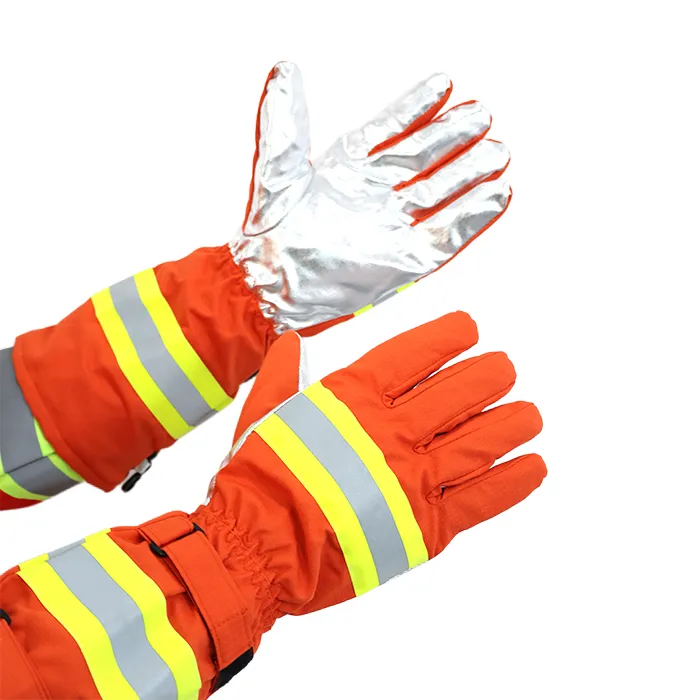
Don’t forget about thermal hazards, either. Soldering is one of the core processes in electronics assembly, and solder fumes aren’t just unpleasant—they contain heavy metals, rosin, and other compounds that can cause asthma or chronic lung issues with repeated exposure. The soldering irons themselves can reach temperatures over 800 degrees Fahrenheit, so a stray spark or a worker brushing against a hot tip can cause a serious burn. Our soldering smock aprons are made with fire-resistant, heat-treated fabric that deflects those sparks, and we work with clients to make sure the aprons fit just right—not too long to get caught on equipment, not too short to leave a gap when bending over the line. We also offer fitted face shields that protect workers’ faces from splatters while still letting them see the tiny parts they’re working on. One of our most popular products for soldering teams is a pair of heat-resistant glove liners that go under ESD gloves—they add an extra layer of insulation without reducing the sensitivity workers need to handle small components.
What I’ve learned over the years is that the best protective clothing for electronics isn’t one-size-fits-all. Every factory has different processes, different lines, and different worker needs. A cleanroom assembling semiconductors has totally different requirements than a plant making consumer electronics like smart watches. In cleanrooms, for example, you need particulate-free clothing that doesn’t shed any fibers—our cleanroom coveralls are sealed at the wrists, ankles, and neck to keep external contaminants out, and they’re designed to be laundered in special facilities that meet ISO 14644-1 standards. For workers in shipping and receiving, who might handle bulky components and heavy packaging, we offer durable ESD coveralls with reinforced elbows and knees, so they last longer and stay effective even after months of wear. I’ve had clients tell me they used to go through generic coveralls every two months, but our gear lasts six times longer, which actually saves them money in the long run.
Another part of the role of protective clothing in electronics is training and engagement. A few years ago, we started including simple, quick-reference cards with every order, explaining why each piece of gear matters—instead of just saying “wear this.” We found that when workers understand the risk they’re avoiding, they’re more likely to follow the rules. For example, we tell soldering teams that a single unprotected exposure to rosin fumes can trigger asthma, even if they’ve worked in the industry for 10 years. We also encourage clients to hold monthly “gear feedback” sessions with their workers, because no one knows the line better than the people doing the job. Last year, a team at a factory in Phoenix told us their ESD shoes were too tight and causing blisters, so we worked with our manufacturer to redesign the toe box for more room, and defects from ESD incidents dropped another 15%. That’s the kind of partnership we pride ourselves on—we’re not just a supplier, we’re a partner in keeping their workers safe and their products reliable.
I’ve also seen how technology is changing protective clothing, and how that’s changing the industry. A lot of newer products now have built-in sensors that monitor things like worker movement, exposure to chemicals, or even static charge levels. For example, some of our ESD lab coats now have small sensors that alert a worker if their static dissipation is too low, so they can adjust before touching a component. There are also smart gloves that track grip pressure and hand position, which helps reduce repetitive strain injuries—a big issue in electronics assembly, where workers do the same tiny motions thousands of times a day. These innovations aren’t about making workers feel monitored; they’re about giving them real-time feedback to stay safe and do their jobs better.
At the end of the day, the electronics industry relies on trust—workers trust that their gear will keep them safe, and customers trust that the devices they buy work as intended. Protective clothing is the link between those two things. It’s the reason a component that costs a few cents doesn’t get damaged in the factory, it’s the reason a worker can go home to their family without breathing in toxic fumes, and it’s the reason a smartphone you buy lasts for years without unexpected failures. I’ve been doing this for 15 years, and I still hear from former clients about how our gear helped them grow their business. That’s the real role of protective clothing: it’s not just a barrier against hazards—it’s a foundation for the entire industry’s success.
If you’re a facility manager, safety director, or operations lead looking to upgrade your protective clothing program, or just want to better understand what your team needs to stay safe and productive, I’d be glad to chat. We can walk through your specific processes, talk about standards you need to meet, and find solutions that balance safety, comfort, and cost-effectiveness. Don’t hesitate to reach out to start the conversation about custom protective clothing for your electronics operations.
Light-duty Fire Pump References
- ANSI/ESD S20.20-2021, Electrostatic Discharge Protection for Electronic Assemblies and Devices
- ISO 14644-1:2015, Cleanrooms and Associated Controlled Environments – Part 1: Classification of air cleanliness by particle concentration
- Occupational Safety and Health Administration (OSHA), "Protecting Workers in the Electronics Industry," 2022
- National Institute for Occupational Safety and Health (NIOSH), "Health Effects of Soldering Fumes," 2020
- Journal of Occupational and Environmental Hygiene, "ESD Damage in Semiconductor Manufacturing: Cost Drivers and Mitigation Strategies," 2019
Zhenjiang Linhao Forest Fire Prevention Equipment Co., Ltd.
Zhenjiang Linhao Forest Fire Prevention Equipment Co., Ltd. is one of the most reliable manufacturers and suppliers of protective clothing in China, featured by quality products and low price. Please rest assured to wholesale customized protective clothing from our factory. Contact us for quotation and free sample.
Address: No.16,Fenghuangshan Road, Runzhou District, Zhenjiang City, Jiangsu Province
E-mail: lh@lhfirefighting.com
WebSite: https://www.lhfirefighting.com/
