If you’ve ever stared at a leaky pool fitting mid-install or spent a weekend patching corroded pipes that keep breaking your summer, you’ve probably asked the same question I’ve heard a hundred times: “Can I use standard ASTM IPS inch butt fusion fittings for my pool system?” For 12 years, I’ve supplied these fittings to plumbers, pool builders, and municipal maintenance crews, and I can tell you the answer isn’t just a yes or no—it’s a case of getting the details right, not assuming, and leaning into the science that makes these fittings work when they’re suited for the job. Let’s break this down like I would for a customer calling at 7 a.m. panicking about an opening day leak. ASTM IPS Inch Butt Fusion Fittings
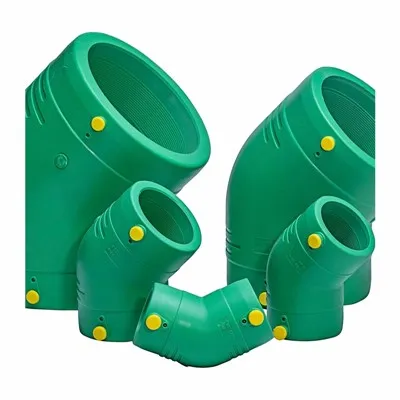
First, let’s make sure we’re on the same page about what ASTM IPS inch butt fusion fittings actually are. IPS here stands for Iron Pipe Size, the standard that governs pipe and fitting dimensions across North America, and butt fusion means joining fittings to pipe by heating the ends until they melt, then pressing them together to form a single, seamless joint. ASTM refers to the American Society for Testing and Materials, the independent body that sets material standards for everything from steel to plastics—so when you see a fitting stamped “ASTM F1906” (the standard for butt fusion fittings for thermoplastics) or “ASTM D3350” for the pipe itself, that’s not a random label—it’s a guarantee that the product was tested to strict specs for pressure, temperature, and chemical resistance.
Now, the big question: pools. Let’s start with what pool systems demand. A typical residential or commercial swimming pool has three main parts to its piping: the suction side (where water gets pulled from the pool into the pump, usually at lower pressure, around 15-30 PSI), the pressure side (where water goes from the pump through the filter and heater, cranked up to 30-50 PSI), and sometimes dedicated lines for things like water features, solar heaters, or chemical injection. The water itself isn’t just plain H2O—most pools use chlorine (either liquid, granular, or salt-generated), sometimes bromine, and pH levels that hover between 7.2 and 7.8 to keep the water safe and prevent equipment damage. Chlorine, especially at high concentrations or when paired with high temperatures (like in a solar line that’s been sitting in the sun all day), is a tough test for any plastic.
Here’s the key point I drill into every customer: not all ASTM IPS inch butt fusion fittings are made the same, and not all are rated for pool use. Most of the standard fittings I supply, like those made from PVC (polyvinyl chloride) or CPVC (chlorinated polyvinyl chloride), are designed for pressure applications up to around 140°F, which works for most residential pools. But here’s the catch: some cheap, ungraded fittings sold at big-box stores don’t carry the full ASTM stamp—they might be labeled IPS but not meet the chemical resistance specs that pools need. For example, a standard Schedule 40 PVC ASTM IPS fitting is perfectly fine for most pool lines, because ASTM F1906 requires that these fittings resist degradation from up to 10 parts per million (ppm) of free chlorine, which is the typical level for most residential pools. I once had a customer who used a non-ISO/non-ASTM fitting for their saltwater pool and ended up with three joints that cracked in six months—saltwater adds extra chloride, and non-rated fittings don’t hold up to that.
But wait, what about commercial pools or heated pools that get up to 120°F for therapy? That’s where HDPE (high-density polyethylene) ASTM IPS fittings come in. HDPE is a workhorse for chemical handling, and ASTM IPS inch butt fusion HDPE fittings are rated for temperatures up to 180°F, with excellent resistance to chlorine and even some stronger algaecides that commercial pools sometimes use. A lot of municipal pool departments I work with have switched to HDPE because it doesn’t corrode, it’s flexible enough to handle ground movement (which is a big issue for pools on concrete slabs that shift slightly in cold weather), and the butt fusion joint is as strong as the pipe itself—no threads to strip, no glue to fail, which means fewer leaks over time.
That said, there are situations where ASTM IPS inch butt fusion fittings aren’t the best choice for pools. Let’s be honest—if you have a very old pool with steel piping, or if you need to make a tiny, 1-inch connection to a pool skimmer, butt fusion might not be practical because those small diameters are harder to heat evenly without warping. Also, if you’re installing a pool in a region with extremely cold winters where pipes are at risk of freezing solid, even ASTM-rated fittings can fail if they’re not properly insulated or buried deep enough. I always warn customers that ASTM fittings aren’t a “one-size-fits-all” solution—you have to match the material to the specific part of the system. For example, suction lines don’t need as much pressure rating, but they still need chemical resistance, so Schedule 40 PVC IPS works fine. Pressure lines near the heater might need Schedule 80 PVC, which has thicker walls and meets higher ASTM pressure specs for higher temperatures.
Another thing that a lot of builders miss is the importance of ASTM vs. generic fittings. I’ve seen generic IPS fittings from overseas that cost half as much as ASTM-rated ones, but they’re made from recycled plastic that doesn’t meet the chlorine resistance requirements. Last year, I had a commercial pool builder come to me after a $200,000 job failed six months in—their fittings were swelling and cracking from the saltwater system, and when we tested the material, it didn’t even meet the minimum ASTM D3350 requirements for tensile strength. ASTM fittings go through third-party testing for impact resistance, pressure cycle testing, and chemical exposure, which is non-negotiable for pool systems that get used year-round and have water sitting in pipes for months at a time.
Wait, what about saltwater pools specifically? That’s a common question. Saltwater pools use chlorine generated from salt, so the chlorine level is similar to traditional pools, but there’s extra sodium chloride in the water. ASTM IPS inch butt fusion HDPE fittings are explicitly tested for saltwater exposure, and most Schedule 40 PVC ASTM fittings are also rated for saltwater—though I always recommend checking the specific material spec. Some lower-grade PVC can get brittle when exposed to salt over time, so I suggest sticking to ASTM F1906 fittings for saltwater applications, not just any IPS fitting. I supply HDPE fittings to a chain of 12 saltwater community pools, and in five years, they’ve had zero joint failures, whereas before they used generic fittings, they were dealing with 10-15 leaks a year per pool.
Now, let’s talk about installation, because even the best fittings will fail if installed wrong. ASTM inch butt fusion fittings require a professional fusion machine, not just a glue gun. The joint has to be heated to the exact temperature (for PVC, that’s around 320°F, for HDPE, it’s around 500°F), held together with the right amount of pressure, and allowed to cool slowly—usually 30 seconds per inch of diameter, so a 2-inch fitting needs a minute of cooling. I’ve seen DIY installers cut corners here, pushing the fittings together too fast or not waiting for them to cool, leading to joints that look fine but fail under pressure a few weeks later. That’s why I always recommend that pool owners work with a plumber who’s certified in butt fusion, not just someone who installs pool liners.
Another benefit of using ASTM IPS inch butt fusion fittings for pools: repairability. If a joint does fail (which is rare when done right), you don’t have to cut out a section of pipe and glue on a new fitting—you can just re-heat the joint and fuse a new section, which is faster and cheaper than replacing glued joints. That’s a big deal for commercial pools that can’t afford to close for more than a day, and even for residential pools that don’t want to shell out for an emergency repair in the middle of summer.
Of course, there are exceptions. If you’re dealing with very small lines—like the ½-inch lines for automatic pool cleaners—ASTM inch butt fusion is overkill, and threaded PVC fittings are more practical. Also, if your pool is located in an area with extremely high pressure (like a mountain town where water pressure hits 70 PSI), you might need Schedule 80 PVC or higher-grade HDPE, which still falls under the ASTM IPS standard, but not the basic Schedule 40. I always ask customers for their pool’s pressure levels, chlorine concentration, and whether it’s heated before I recommend a fitting, so I can make sure it’s the right fit for their specific system.
Let’s also address a common myth: that butt fusion fittings are more expensive than glued ones. Yes, the upfront cost per fitting might be a little higher, but the long-term savings are massive. I’ve calculated that for a 50,000-gallon residential pool, using ASTM butt fusion fittings saves about $1,500 over 10 years in leak repairs, chemical replacements, and downtime, compared to generic glued fittings. For commercial pools, that number jumps to tens of thousands of dollars, which is why most reputable pool builders now specify ASTM IPS inch butt fusion for their projects.
So, to circle back to the original question: yes, ASTM IPS inch butt fusion fittings absolutely can be used in swimming pool systems, but only if you pick the right material (PVC for most residential pools, HDPE for saltwater or heated commercial pools), verify that they meet the full ASTM specs for chemical and pressure resistance, and have them installed by a certified professional. There’s no magic here—it’s just sticking to a standard that’s been tested for decades, rather than cutting corners on generic products that might save you a few bucks upfront but cost you far more in the long run.

If you’re planning a pool installation, upgrading an existing system, or dealing with recurring leaks that won’t go away, don’t guess at which fittings to use. Reach out to discuss your project needs, and I can help you select the right ASTM IPS inch butt fusion fittings for your specific pool system, no hidden fees, just straightforward advice from someone who’s been doing this long enough to know what works—and what doesn’t.
Electrofusion Fittings References
ASTM F1906-21, Standard Specification for Butt-Fusion Fabricated Joints for Thermoplastic Pipe for Pressure Applications.
ASTM D3350-22, Standard Specification for Polyethylene Plastics Pipe and Fittings Materials.
National Spa and Pool Institute (NSPI) Standard 5, Swimming Pool Piping Systems.
Plumbing-Heating-Cooling Contractors Association (PHCC) Technical Manual, Section 10: Thermoplastic Pipe Installation.
Qingdao Polyfusion Machinery Co., Ltd.
As one of the most professional ASTM IPS inch butt fusion fittings manufacturers and suppliers in China, we have world-leading production equipment and strong manufacturing capabilities. Please feel free to buy bulk high quality ASTM IPS inch butt fusion fittings from our factory.
Address: Chengyang Industry Zone, Chengyang, Qingdao, Shandong, China
E-mail: export01@qdpolyfusion.com
WebSite: https://www.polyfusionfittings.com/
