If you’ve ever visited a fabrication shop, a bridge construction site, or even a pressure vessel manufacturing floor, you’ve likely seen carbon steel sheet or plate sitting front and center. It’s the workhorse of so many industries—affordable, easy to weld, strong enough to hold up under heavy loads, and versatile enough to be cut, formed, or shaped into nearly any component you need. But for anyone relying on it for long-term, high-stakes applications, one question always comes up: how long does it actually last before fatigue sets in? As a supplier of carbon steel sheet and plate, I get asked this constantly by engineers, project managers, and small business owners alike—and the answer isn’t as simple as a single number. It depends on a lot of factors, and that’s what I want to break down here today. Carbon Steel Sheet/Plate
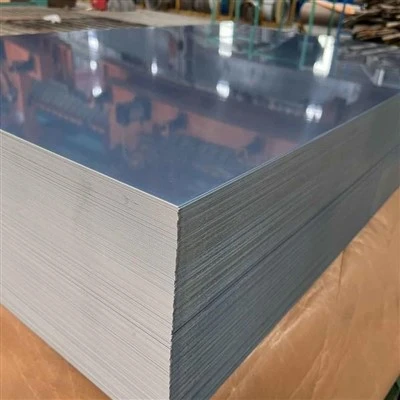
First, let’s make sure we’re all on the same page about what fatigue life actually means for metal. Fatigue isn’t just wearing out from being old or used roughly. It’s a gradual process that happens when metal is subjected to repeated, cyclic loads over time. Think of it like bending a paperclip back and forth 10 times—it doesn’t break right away, but bend it 50 times, and it snaps. For carbon steel, that’s exactly what’s happening on a microscopic level: tiny cracks form at stress points, like the edge of a weld or a scratch from fabrication, and each load cycle makes those cracks a little bigger, until eventually the part fails. That’s critical because for applications like offshore wind towers, truck frames, or storage tanks, a sudden fatigue failure isn’t just an inconvenience—it can be dangerous and costly.
Now, when people ask for the fatigue life of carbon steel sheet or plate, the first thing I tell them is that there’s no one-size-fits-all number. It’s not like a lightbulb that’s rated for 10,000 hours. Instead, fatigue life is measured in cycles, and it varies wildly based on three big factors: the grade of carbon steel, the amount of stress it’s under, and any surface or fabrication defects it has. Let’s start with grade, because that’s where we as suppliers have the most control. Not all carbon steel is the same—there’s mild steel (A36, the most common), higher-strength grades like A572, and even low-alloy carbon steels that add a tiny bit of other metals to boost strength and fatigue resistance.
Take A36 carbon steel, for example. That’s the go-to for general construction, farm equipment, and low-pressure parts. Its fatigue limit—wait, let’s define that term too, because it’s a big one—for most carbon steel, there’s something called a fatigue limit (or endurance limit), which is the maximum stress the metal can handle indefinitely, without ever failing from fatigue. For A36, that fatigue limit is roughly around 18,000 psi, or 124 MPa. What that means in real terms is that if you subject a sheet or plate of A36 to a load that never exceeds 18,000 psi, it could last for millions of cycles—essentially forever, for practical purposes. But if you push that stress higher, say to 30,000 psi, the fatigue life drops drastically: maybe only a few thousand cycles before it cracks. For higher-strength grades like A572 Grade 50, that fatigue limit is a little higher, around 25,000 psi, so it can handle more cyclic load before fatigue sets in.
That’s the lab setting, of course. Real-world applications are never as controlled as a lab. Take a delivery truck frame, for example. It’s not just sitting under a constant load—it’s bouncing over potholes, carrying different weights every trip, subject to vibrations from the engine and road, and even the weather, which can cause small rust spots that become stress raisers. A tiny rust pit on the surface of a steel plate acts like a little notch, concentrating stress right there, and that cuts fatigue life by a huge amount. I’ve seen examples where a plate that should last 10 million cycles in a lab only lasts 200,000 cycles in actual use because of a small scratch from a forklift or a tiny rust spot that no one noticed during inspection.
Another big factor is the fabrication process. When we cut, weld, or form carbon steel sheet and plate, we leave behind traces that affect fatigue life. Welds are a particularly common weak point. Even a perfectly executed weld leaves a tiny bit of stress concentration at the toe of the weld, where the weld meets the base metal. That’s why, when we work with customers on custom projects, we always tell them about post-weld treatments like grinding the weld toe smooth to eliminate that sharp edge, or even peening it with a small hammer to compress the surface and counteract the tensile stress from welding. Without that, a welded joint might have a fatigue life that’s 50% shorter than the base plate itself. Cold forming is another one—if you bend a plate too sharply without annealing it, the metal gets work-hardened, which makes it harder but more prone to cracking under cyclic load, shortening fatigue life.
Let’s put this in context with actual examples, because numbers mean nothing if you can’t see how they apply. A few years back, I worked with a customer who was building a conveyor system for a mining operation. They were using 1/2-inch A36 steel plate for the frame, and they wanted to know how long it would last under the repeated load of carrying 10,000 pounds of ore back and forth, 12 hours a day, 5 days a week. First, we calculated the cyclic stress: the load on the frame would peak at around 15,000 psi, which is well below A36’s fatigue limit of 18,000 psi. But they had a problem: their initial fabrication process left rough, unground welds, and the plate had a few small surface scratches from being moved around the shop. We tested the adjusted stress, accounting for those defects, and found that their initial design would only last about 3 years. We suggested they grind all welds smooth and apply a protective coating to prevent rust, which brought the estimated fatigue life up to over 15 years—easily matching the expected lifespan of the entire conveyor system. That’s the difference between understanding fatigue life and guessing, and it’s why our customers rely on us for more than just good steel; they rely on us to give them that real-world perspective.
Something I often have to clarify is the difference between fatigue life and static strength. A lot of people think, “If this steel can hold 50,000 pounds static, it should hold that same load repeated forever.” That’s not true at all. Static strength is about withstanding one big load without breaking. Fatigue is about small loads repeated over and over, and even loads that are way below the static breaking point can cause failure if they cycle enough times. For example, a steel plate with a static breaking strength of 60,000 psi might only last 10,000 cycles if it’s under a cyclic load of 40,000 psi—even though that’s way below its static limit. It’s a common mistake, but one that can lead to big problems down the line.
What about thinner carbon steel sheet, the kind used for car parts, storage bins, or roofing? The same fatigue principles apply, but the numbers shift a bit. For thinner gauge steel, the fatigue limit is slightly lower, and surface defects matter even more because the material is so thin. A small scratch on a 16-gauge sheet can cut its fatigue life in half, whereas the same scratch on a 1-inch plate might barely be noticeable. That’s why for thin sheet used in cyclic applications, we often recommend a grade with a slightly higher fatigue limit, like a high-strength low-alloy carbon steel, or even adding a protective coating like galvanizing, which not only prevents rust but also smooths out surface defects that cause stress.
As a supplier, we’ve done a lot of testing on our own material to back up these numbers. We run cyclic load tests on every grade of sheet and plate we carry, from 16-gauge sheet up to 4-inch plate, to get real-world fatigue data for our customers. For instance, our A36 plate tested at 18,200 psi fatigue limit, which lines up with industry standards, and our A572 Grade 50 came in at 24,700 psi—slightly lower than published numbers, which we attribute to our consistent quality control in rolling the plate, ensuring uniform grain structure that boosts fatigue resistance. We also test for surface quality, because we know that a mill edge that’s smooth (from our slitting process) is going to give better fatigue life than a rough, sheared edge. That’s why we invest in modern slitting and cutting equipment, not just for precision, but for the small details that add up to longer part life for our customers.
Another thing that affects fatigue life is environment. If your steel is outdoors, exposed to moisture, salt, or chemicals, that’s going to speed up crack growth. Corrosion acts like tiny notches on the metal surface, each one a stress raiser that makes cracks grow faster. A steel plate sitting in a dry warehouse will have a much longer fatigue life than the same plate sitting on a dock exposed to salt spray. We always advise customers working in harsh environments to consider both the grade of steel and a protective coating—paint, powder coat, hot-dip galvanizing—that will slow down corrosion and preserve fatigue life. I had a customer a few years ago who built small storage tanks for a coastal town; he initially used uncoated A36 plate, but after a year, we saw that the salt air was eating into the surface, cutting his estimated fatigue life in half. We suggested he switch to hot-dipped galvanized A36, which cost him 10% more upfront but meant his tanks would last 20 years instead of 5—saving him tens of thousands of dollars in replacement and maintenance.
So, putting all this together, what’s the takeaway? The fatigue life of carbon steel sheet and plate isn’t a fixed number. It’s a range that depends on the grade you choose, the stress levels of your application, the quality of fabrication and surface treatment, and the environment it’s used in. For most general construction applications using standard A36 plate under low cyclic stress, you’re looking at a fatigue life of millions of cycles—enough to last decades, if not more, with proper installation and maintenance. For higher-stress applications, like heavy machinery or offshore components, you’ll need a higher-grade steel and careful attention to fabrication details to extend that life.
That’s why working with a reliable carbon steel supplier matters more than just getting the lowest price. We don’t just sell you a sheet of steel; we help you understand how that steel will perform in your specific application. Whether you’re building a small trailer, a bridge, a conveyor system, or a pressure vessel, we can walk you through the factors that will affect its fatigue life, recommend the right grade of sheet or plate, and even advise on fabrication and surface treatments to make sure your part lasts as long as you need it to. I’ve been in this industry for over 20 years, and the best part of my job isn’t just shipping steel—it’s helping customers avoid costly mistakes by understanding the details that make all the difference.

If you’re working on a project that relies on carbon steel sheet or plate, and you want to get a clear idea of its expected fatigue life, don’t hesitate to reach out. We can provide test data for our material, help you select the right grade, and answer any questions you have about fabrication, coatings, or application-specific performance. Your project deserves to last, and we’re here to make sure the steel you use is up to the task.
Aluminum References
- ASM International. Fatigue of Carbon Steels. ASM Handbook, Volume 19: Fatigue and Fracture, 1996.
- NASA. Metallic Materials Properties Development and Standardization (MMPDS) Handbook, 2021.
- Schijve, J. Fatigue of Structures and Materials. Springer, 2009.
- American Society of Mechanical Engineers (ASME). Boiler and Pressure Vessel Code, Section VIII, 2023.
- Carbon Steel Institute. Fatigue Performance of Structural Carbon Steels, 2022.
Wuxi Jin Ming Jian De Industry & Trade Co., Ltd.
Wuxi Jin Ming Jian De Industry & Trade Co., Ltd. is one of the most professional carbon steel sheet/plate manufacturers and suppliers in China, also supports customized service. With abundant experience, we warmly welcome you to wholesale CE approved carbon steel sheet/plate in stock here from our factory. If you have any enquiry about quotation, please feel free to email us.
Address: 2102-2105, Yuexing Building, Guangnan Road, Liangxi District, Wuxi City, Jiangsu Province, China.
E-mail: info@wxjmjdss.com
WebSite: https://www.jmjdsteelexp.com/
