If you’ve ever stood at the base of a building under construction, a tree too tall to prune, or a warehouse ceiling that needs maintenance, chances are you’ve stared up at a telescopic boom lift and wondered: how high can that thing actually go? As a supplier who’s spent years getting to know every inch of these machines, I get this question all the time—and it’s not a one-size-fits-all answer. The maximum working height of a telescopic boom lift isn’t just a number on a spec sheet; it’s a detail that makes or breaks a job, from changing a street sign on a busy avenue to installing equipment on the 20th floor of an office building. Telescopic Boom Lift
Let’s start with the basics. A telescopic boom lift (sometimes called a straight boom lift, for its single extendable arm) gets its height from that rigid, extendable boom—unlike articulating boom lifts, which bend at joints to reach around obstacles. The maximum working height isn’t just how high the boom can stretch; it’s the height from the ground to the platform floor, which is what crews rely on to get their work done. That’s a key distinction from the maximum boom length, which is how far the arm itself reaches. For example, a lift with a 60-foot maximum boom length usually has a working height of around 56 feet, because the platform sits at the end of the boom.
Now, the big question: what’s the actual maximum out there? In my years in this business, I’ve seen models ranging from compact, yard-friendly lifts that hit 40 feet all the way up to heavy-duty units that top out at 185 feet. Wait, 185 feet? That’s taller than a 15-story building. But before you think, “I just need something for hanging Christmas lights, so 40 feet is enough,” let’s break down why that range exists—and why getting the right height matters.
First, category matters. Compact telescopic boom lifts are designed for jobs that don’t need to reach extreme heights: things like painting single-story storefronts, pruning backyard trees, or maintaining warehouse lighting in spaces with low ceilings. These usually cap at 40 to 60 feet of working height. They’re lightweight, easy to move through narrow gates or hallways, and don’t require special permits for transport in most cases. Then there’s the mid-range, which is the sweet spot for most commercial contractors: working heights from 60 to 120 feet. This is what you’ll see on apartment building construction sites, for installing window trim on 10-story structures, or for servicing streetlights on multi-lane roads.
The heavy-duty stuff is the 120 to 185 foot models. These aren’t for everyday jobs—they’re for skyscraper construction, bridge maintenance, or working on wind turbine components that stand hundreds of feet tall. A few years back, we supplied one of these 185-foot units to a team doing repairs on a downtown hotel’s facade. They needed to reach the top of the 17-story building, and that lift was the only one on the market that could get them high enough without needing to set up multiple scaffolding sections. It saved them weeks of work and thousands in rental fees.
But here’s where it gets tricky: the maximum height isn’t just a number. It depends on three big factors that can change how high a lift can actually go on any given job. First, platform capacity. If you overload the platform—say, two workers plus tools weigh more than the lift is rated for—the maximum working height drops. That’s not a safety rule; it’s physics. The boom has to support the weight at the end, so if it’s carrying too much, it can’t extend as far without tipping or straining. For example, a 120-foot lift might have a 500-pound capacity when it’s fully extended, but if you only have one worker and light tools, you might be able to reach a few extra feet. But we always tell crews to stick to the rated capacity—cutting corners here is how accidents happen.
Second, terrain. A lift sitting on soft dirt or a sloped surface can’t reach its advertised maximum height. The hydraulic system that extends the boom relies on stable, level ground. If the ground isn’t level, the lift’s sensors will automatically cap the height to keep it safe. We once had a contractor show up to a job with a 100-foot boom lift, set it up on a muddy construction site, and then call us saying it wouldn’t extend all the way. We walked him through checking the level—he’d placed the rear wheels on a uneven pile of gravel—and once he adjusted, he hit his full working height. It’s a small step, but it’s the difference between a job done right and a delay.
Third, model type and design. Not all telescopic booms are built the same. Some are designed for rough terrain, with larger tires and sturdier frames, which can handle uneven ground but might have a slightly lower maximum height than a smooth-terrain model. Others are compact for indoor use, with narrower bases that can fit through doorways but can’t reach as high as their outdoor counterparts. I’ve seen customers mix these up all the time: someone renting an indoor lift for a warehouse ceiling job only to find it’s too short, or buying a rough-terrain lift for a small residential job and paying for a height they’ll never use.
Now, let’s talk about what this means for you, whether you’re a contractor, a property manager, or someone tackling a DIY project (though I should add a quick note: for any job over 10 feet, always use a professional lift and trained operator—DIY boom lift use is dangerous and not recommended). The first step to getting the right maximum working height is to map your job space. Measure the highest point you need to reach, then add a few feet for safety. If you need to reach a 50-foot ceiling, a 56-foot working height lift is perfect—you don’t need a 100-foot model, and you’ll save money on rental or purchase costs. If you’re working on a 15-story building, you’ll need that 185-foot unit, but make sure you have space to maneuver it too—those heavy lifts need wide access roads and stable foundations.
I’ve had customers come to us saying they need a “high reach” lift, and when we ask for details, they realize they don’t need the top-end model. Last year, a small painting company called us panicking because their old 40-foot lift broke down mid-job on a 60-foot office building. We talked them through their needs: they needed to reach the top floor, move around the side of the building, and fit through a narrow loading dock. We recommended a 66-foot working height telescopic boom lift—one that’s compact enough for the dock, had enough platform space for two painters, and could reach exactly where they needed. They finished the job two days early, and the total cost was half what they would have spent on a 120-foot unit they didn’t need.
Another common question: can you adjust the height of a telescopic boom lift mid-job? Yes, but again, within the safety limits. You can extend or retract the boom as you work, lower it to pick up tools, or raise it to reach a higher spot—but you never want to exceed the rated maximum height for your load and terrain. For example, if you’re on a sloped surface, even a small adjustment can make the lift’s sensors kick in, so it’s better to level the ground first if possible.
Safety is a big part of this, and it’s something we emphasize to every customer. The maximum working height isn’t a marketing gimmick—it’s a safety threshold set by manufacturers, tested to make sure the lift won’t tip or fail. We always train our operators (and any customers we rent to) to check the lift’s specs before each job, inspect the ground, and never overload the platform. A few years ago, a customer tried to carry three times the rated capacity on a 80-foot lift, and when they extended the boom to full height, the lift’s alarm went off and it automatically retracted the boom. It was a close call, and it taught him why those safety features are there.
Now, let’s get back to the core question: what is the maximum working height? If you’re looking for an industry standard, most modern telescopic boom lifts top out at 185 feet. There are a few custom-built models that go higher, but those are rare, for specialized jobs like wind turbine maintenance or bridge inspection. For most commercial and residential jobs, the sweet spot is between 40 and 120 feet.
But here’s the thing: as a supplier, we don’t just sell a number. We sell the right lift for the job. That’s why we spend time talking to customers about what they’re doing, where they’re doing it, and what they need to get the job done. We’ve got compact models for tight spaces, mid-range for general construction, and heavy-duty units for the big projects. We also offer training for operators, maintenance services to keep lifts in top shape, and tips on how to set up for maximum height safely.
A lot of people new to renting or buying boom lifts don’t realize that the height isn’t the only factor. Reach—how far the boom can extend horizontally—matters too. If you’re working on a building that’s set back from a street, you might need a lift that can reach 30 feet horizontally, even if you don’t need extreme height. A 100-foot working height lift might have a horizontal reach of 50 feet, while a 120-foot model might only have 40 feet of reach. That’s another detail we help customers sort out, because you don’t want a lift that can reach high but can’t reach far enough to get around a building’s overhang.
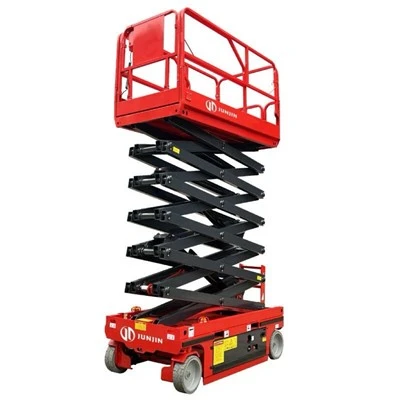
We also see a lot of confusion between telescopic boom lifts and other types of aerial lifts. Scissor lifts, for example, have a working height that’s usually lower—up to about 40 feet—and they don’t have a extendable boom, so they can’t reach around obstacles. Articulating boom lifts can bend to reach around corners, but their maximum height is usually a bit lower than telescopic booms. So if you need straight, high reach, telescopic is the way to go.
I’ve been in this business for 12 years, and one thing I’ve learned is that the best advice we can give is to not just look at the maximum height, but to plan your job thoroughly. Measure the space, check the terrain, calculate how much weight you’ll have in the platform, and then pick a lift that meets all those needs. Too many people either rent something too small and can’t finish the job, or something too big and waste money on features they don’t need.
At the end of the day, the maximum working height of a telescopic boom lift is a critical spec, but it’s just one piece of the puzzle. That’s why we’re here—whether you’re a contractor on a tight deadline, a property manager needing regular maintenance, or someone who just needs a lift for a one-time job, we can help you find the right model, at the right height, with the right support to get the job done safely and on budget.

If you’re ready to talk through your project and figure out exactly what telescopic boom lift you need, reach out to us to start a conversation. We’ll answer all your questions, walk through specs, and make sure you have everything you need to get the height and reach you’re looking for.
Telescopic Boom Lift References
- Occupational Safety and Health Administration (OSHA). (2022). Aerial Lift Requirements for Construction.
- American National Standards Institute (ANSI). (2021). Aerial Lifts – Safety Standards for Telescopic Boom Lifts.
- International Powered Access Federation (IPAF). (2023). Telescopic Boom Lift Usage and Safety Guidelines.
Yantai Quanrui International Trading Co., Ltd.
As one of the most reliable telescopic boom lift manufacturers and suppliers in China, we’re featured by high quality customized products. Please rest assured to buy discount telescopic boom lift made in China here from our factory. Contact us for pricelist and quotation.
Address: No. 278, Sanya Road, Gaotuan Town, Fushan District, Yantai City, Shandong Province, China
E-mail: Info@quanjin1588.com
WebSite: https://www.qr1588.com/
